
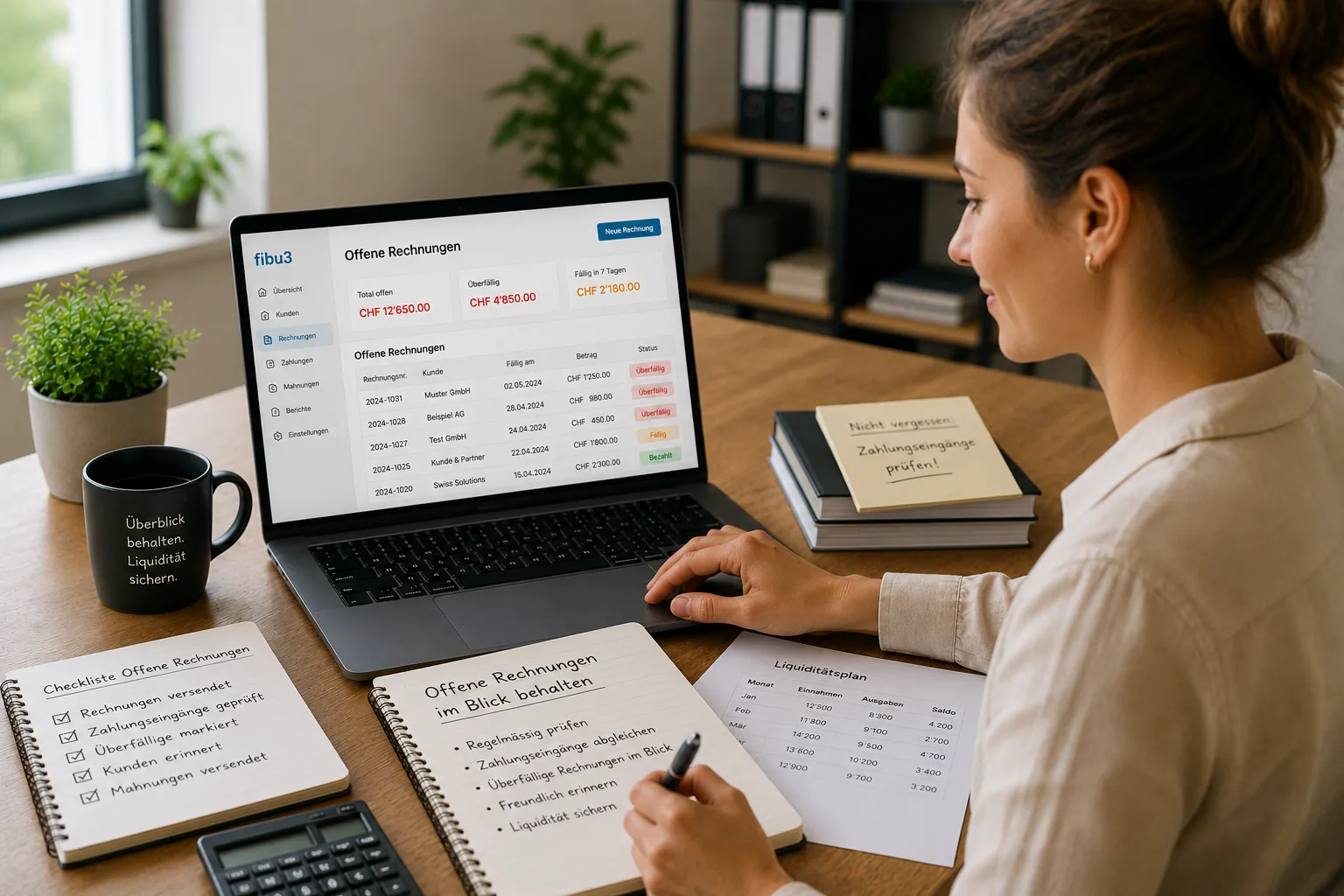
What are unpaid invoices?
Unpaid invoices are invoices that have been sent but not yet paid.
That sounds simple, but it matters in daily operations. An invoice only becomes cash once the money actually arrives in the bank account.
If you manage several customers, projects or memberships, you need a clean overview of these open items.
Why are unpaid invoices a problem?
Unpaid invoices become a problem when they are not visible and not actively followed up.
The issue is rarely just one late payment. The real problem is the mix of weaker liquidity planning, less visibility and delayed action.
- liquidity suffers
- planning becomes less reliable
- more end-of-month stress
- forgotten payments stay open longer
- reminder work increases
How do SMEs keep unpaid invoices under control?
The best approach is a simple, repeatable process.
1. Record invoices immediately
Every sent invoice should be visible right away so it can be followed later.
2. Set a due date
Without a clear due date, it is hard to know when an invoice is truly overdue.
3. Review incoming payments regularly
Do not wait until month-end. Regular checks reveal open amounts sooner.
4. Use bank reconciliation
Confirm that payments actually arrived and were assigned correctly.
5. Mark overdue invoices
Once a due date passes, it should be visible immediately.
6. Send a friendly reminder
Not every late payment needs a hard reminder. A factual first follow-up is often enough.
7. Start the reminder process if needed
If nothing happens after the first reminder, the next step should be prepared.
How often should incoming payments be checked?
For small businesses, a weekly review is often enough; with many invoices, a shorter rhythm is better.
What matters most is consistency rather than perfection.
- weekly for manageable volume
- several times per week for many invoices
- daily only where volume or liquidity pressure is high
What should you do if an invoice is not paid?
If an invoice is not paid, a calm and clear process helps most.
The goal is not early escalation, but timely and structured follow-up.
- check incoming payment
- send a friendly reminder
- set a new deadline
- send a second reminder
- review the next steps
Typical mistakes with unpaid invoices
Most problems come from missing routine rather than from one dramatic mistake.
No due date
Without a due date, overdue status remains unclear.
No regular review
If checks happen only occasionally, open items are noticed too late.
Payments not assigned
A bank transaction is not enough if nobody links it to the right invoice.
Reminders sent too late
Waiting too long weakens clarity and follow-up.
Missing bank reconciliation
Without reconciliation, false open items appear quickly.
Too much manual rework
Scattered lists, emails and notes create extra work and more mistakes.
How fibu3 helps with unpaid invoices
fibu3 helps manage unpaid invoices, incoming payments and reminders in one structured place.
That is useful because invoices, payments, reminders and bank reconciliation stay connected instead of being spread across separate lists.
The result is a calmer, more traceable receivables process.
- manage invoices centrally
- see open amounts
- check incoming payments
- use bank reconciliation
- prepare reminders
- reduce manual lists
Short version: unpaid invoices in one sentence
Unpaid invoices are sent but not yet settled invoices that need active follow-up so liquidity, visibility and the reminder process stay under control.
Checklist - do you have unpaid invoices under control?
These questions give you a quick process check.
- Are all invoices recorded?
- Does every invoice have a due date?
- Do you review incoming payments regularly?
- Are overdue invoices visible?
- Is there a clear reminder process?
Conclusion: keep unpaid invoices under control
Keeping unpaid invoices under control is not just administration. It is a direct contribution to liquidity and everyday stability.
Businesses that record invoices cleanly, review incoming payments regularly and use bank reconciliation reduce stress and improve planning.
Related topics
Useful internal links: writing invoices in Switzerland, writing reminders in Switzerland, bank reconciliation explained simply, recurring invoices, quote vs invoice, pricing, learn and blog.
Frequently asked questions about unpaid invoices and incoming payments
Short answers to common questions about receivables, incoming payments, reminder processes and liquidity.
What are unpaid invoices?
Unpaid invoices are invoices that were sent but have not yet been paid.
How do I check incoming payments?
Best by reviewing the bank account regularly, assigning transactions to invoices and using clean bank reconciliation.
How often should I review unpaid invoices?
For small businesses, a weekly review is often enough. With many invoices, a shorter rhythm makes sense.
What should I do with unpaid invoices?
First verify incoming payment, then send a friendly reminder, set a new deadline and escalate step by step if needed.
When should I send a payment reminder?
When the due date has passed and no payment has been received.
When should I send a formal reminder?
When there is still no payment after the first payment reminder and the invoice remains open.
Why is bank reconciliation important?
Because it shows whether payments actually arrived and were assigned correctly.
How do I avoid liquidity problems?
With clear due dates, regular review of unpaid invoices, clean bank reconciliation and consistent follow-up.
Which software helps?
Helpful software brings invoices, payments and reminders together in one structured process.
Can fibu3 manage unpaid invoices?
Yes. fibu3 helps manage unpaid invoices, incoming payments and reminders in one structured place.
How do I organize receivables more easily?
With clear processes for invoice recording, payment review, marking overdue invoices and prepared reminder steps.
What if payments are on the account but not assigned?
Then the assignment should be completed directly so unpaid invoices and receivables status are correct again.
Related fibu3 solutions
Keep unpaid invoices, payments and reminders together in view
With fibu3, unpaid invoices, incoming payments and reminders stay in one structured workflow instead of scattered manual lists.